Ant Trail Networks
Modeling and Simulation & Scientific Computing
ABOUT
The goal for this project was to replicate the results found in "Modeling the Formation of Trail Networks by Foraging Ants" by James Watmough and Leigh Edelstein-Keshet. In that regard, this project models the behavior of ants in the creation of trail networks. This project implements the two forking algorithms defined in the above paper in order to demonstrate how changes in parameters affect the results of each approach.
- TECHNOLOGIES
- Python
- matplotlib
- numpy
SKILLS USED
- Design models based on previous work
- Model and simulate the formation of networks over time
- Implement probablistic model design
- Validate model performance against previous models and data
- Verify behavior of the models based on published paper
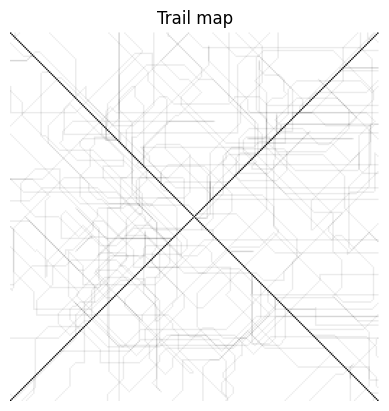
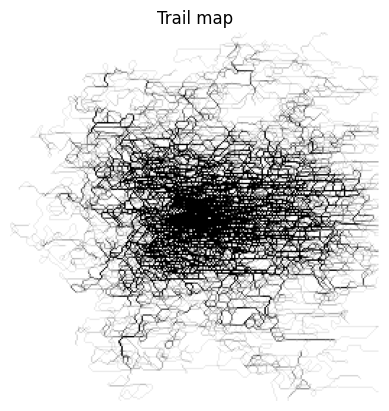
As you can see, the results differ quite drastically. While the first forking algorithm produces a similar diagonal structure as the benchmark, it is important to note that at the end of the simulation, only one ant remains within the bounds of the map, which contrasts with the 148 follower and 108 lost ants at the same time in benchmark. This discrepancy could be due to the implementation of the fidelity parameter as the ants seem to continue to follow the diagonal all the way off the map. On the other hand, in the second forking algorithm, there is a larger condensed region of ants, which does not reflect the benchmark's behavior. This discrepancy could be due to the implmentation of the random aspects within the forking algorithm that leads to too much randomness in the end result.